
The Problem
Cooling represents the largest variable auxiliary energy consumer in high-density data centers, frequently accounting for 25% to 40% of non-IT facility power. Fear of thermal throttling causes operators to maintain conservative safety buffers — running chillers at artificially depressed setpoints (e.g., 7°C chilled water) and pumping coolant at maximum volume regardless of compute utilization. In 40 kW to 100 kW+ racks utilizing hybrid air-liquid cooling, this uncalibrated operation wastes megawatts of mechanical power and strains regional water supplies through excessive cooling tower blowdown.
The GreenNext Approach
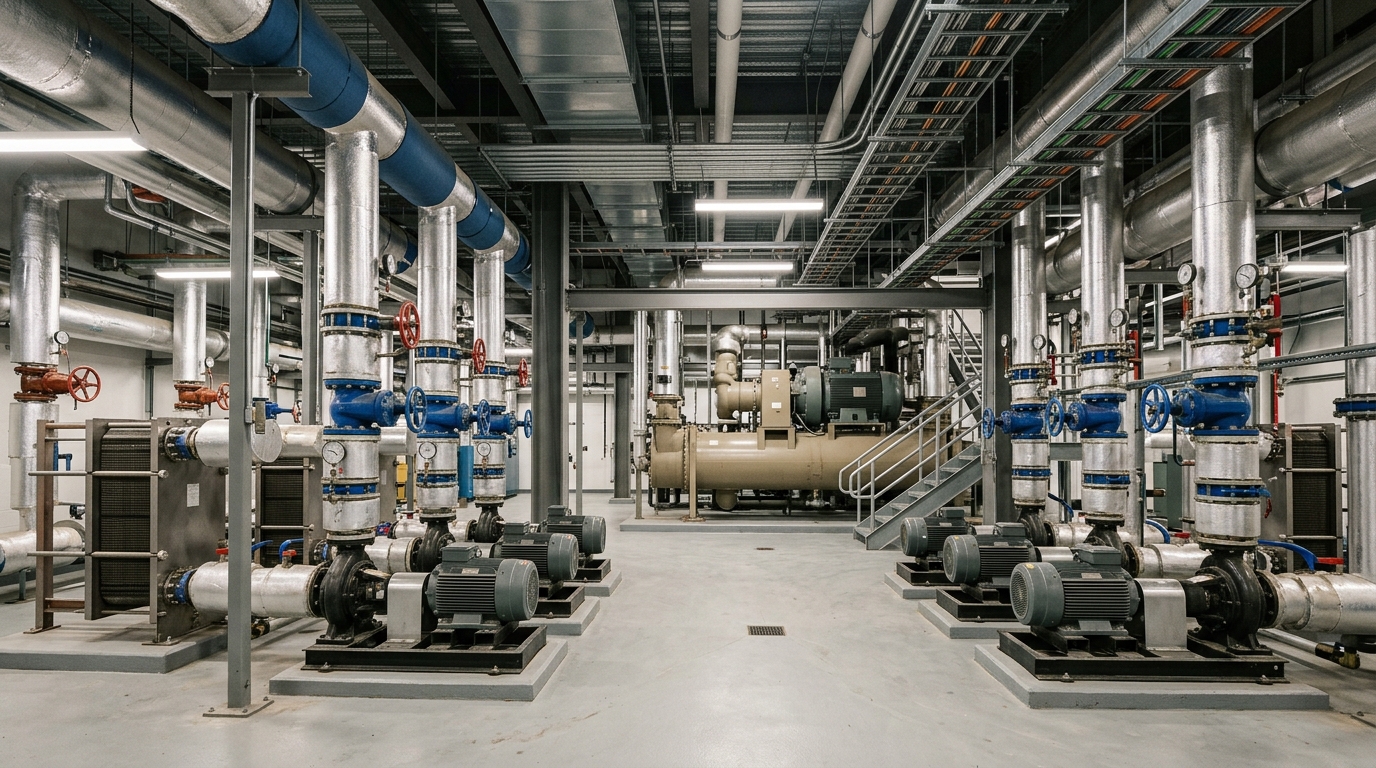
Continuous closed-loop thermal calibration connects rack-level heat rejection dynamics with facility chiller plants and secondary fluid networks (SFNs). By monitoring Coolant Distribution Unit (CDU) approach temperatures, plate heat exchanger Delta-T (Return Temp minus Supply Temp), and server chassis cold-plate fluid flow, the system calculates precise heat extraction requirements. Variable-frequency drives (VFD) modulate pump speeds and cooling tower fan velocities to match actual thermodynamic dissipation rather than assumed peak capacities.
Expected Operational Value
Eliminates the over-cooling penalty while maintaining strict thermal compliance with ASHRAE TC 9.9 liquid cooling guidelines. Literature benchmarks indicate that optimized liquid-cooled secondary loops can reduce auxiliary mechanical cooling energy by 15% to 25% compared to baseline air-cooled facilities. Factual disclaimer: Energy reductions represent theoretical engineering models; actual operational savings depend heavily on local ambient wet-bulb temperatures, facility heat rejection equipment, and continuous flowmeter calibration.
Deploy Cooling Optimization
Discuss your facility parameters and telemetry requirements with our engineering team to evaluate feasibility and implementation architecture.