
Enterprise Engagement & Alignment

Industries GreenNext Serves

GreenNext provides engineering blueprints, operational telemetry frameworks, and infrastructure advisory for organizations navigating the convergence of high-density AI compute, escalating power demand, thermodynamic dissipation boundaries, and regional capacity expansion. Explore our qualification criteria, buying triggers, and alignment matrix.

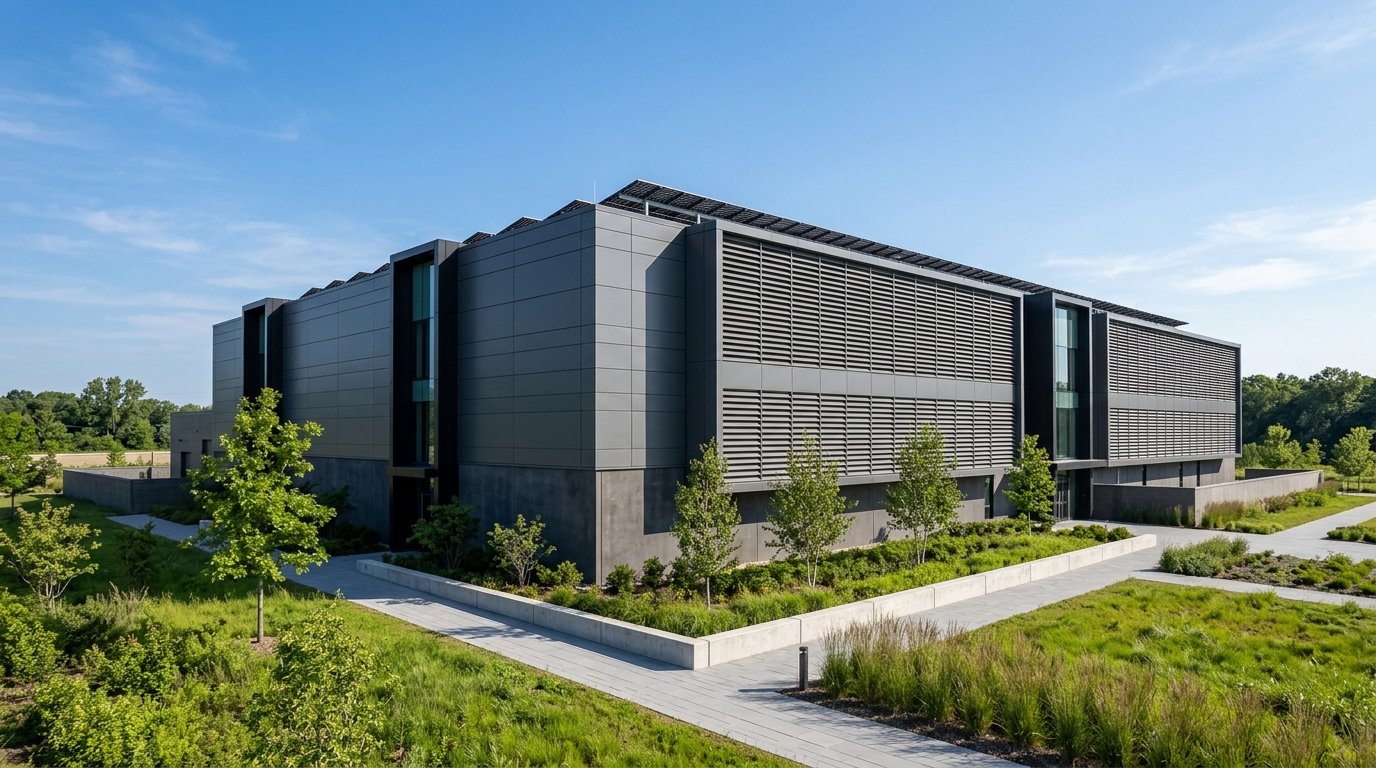
Contemporary enterprise data center facility exterior with sustainable landscaping
ENTERPRISE DIGITAL INFRASTRUCTURE FACILITY (ILLUSTRATIVE)QUALIFIED ARCHITECTURE
01 //

Who GreenNext Serves

The rapid proliferation of accelerator silicon, generative foundation models, and multi-megawatt compute clusters has exposed structural mismatches in traditional data center design. Legacy facilities engineered for 5 kW to 10 kW air-cooled racks cannot support 40 kW to 100+ kW loads without fundamental mechanical, electrical, and operational transformations.

GreenNext is designed specifically to assist organizations responsible for planning, engineering, retrofitting, or operating digital infrastructure facing these physical boundaries. Our engagements focus on physics-based energy modeling, closed-loop telemetry integration, and resilient regional architecture across South India.

SEGMENT 01

Data Center Operators & Colocation Providers

Wholesale and retail colocation providers seeking to upgrade power busways, integrate secondary liquid cooling loops, and offer verifiable PUE transparency to high-density tenants.

SEGMENT 02

AI & Hyperscale Infrastructure Planners

Engineering teams deploying multi-rack GPU clusters, designing high-bandwidth RoCEv2/InfiniBand fabrics, and managing extreme peak-load electrical transients.

SEGMENT 03

Enterprise & Edge Infrastructure Teams

Distributed enterprise technology organizations modernizing legacy on-premises facilities, deploying regional inference nodes, and optimizing private infrastructure utilization.

SEGMENT 04

Sustainability, Energy & ESG Stakeholders

Corporate sustainability directors and energy managers requiring rigorous, auditable Scope 1, 2, and 3 accounting boundaries and clean energy integration models.

02 //

Reference-supported verticals

The following demand environments are market and planning lenses for GreenNext's infrastructure work, not a list of current customers or proof of live deployments.

VERTICAL 01

Cloud, AI & Technology Companies

High-density compute, storage, networking, and thermal planning for cloud, GPU, HPC, and AI workloads.

VERTICAL 02

IT/ITES & Global Capability Centres

Grade-A technology workspace, resilient enterprise IT, and regional talent-led campus planning for software and GCC teams.

VERTICAL 03

BFSI, Healthcare & Life Sciences

Resilient enterprise computing, disaster recovery, security, and low-latency regional infrastructure for regulated workloads.

VERTICAL 04

Manufacturing, Aerospace & DeepTech

Industrial edge AI, precision engineering, robotics, aerospace, EV, and research workloads supported by power and connectivity planning.

VERTICAL 05

Telecom & Digital Connectivity

Carrier-neutral connectivity, fibre diversity, edge nodes, and network resilience planning across regional corridors.

03 //

Customer Qualification Framework

To ensure that engagements deliver rigorous technical value, GreenNext applies an explicit qualification framework based on infrastructure complexity, operational readiness, and strategic alignment. Rather than applying arbitrary revenue or headcount thresholds, qualification focuses on physical facility characteristics and engineering suitability.

Prospective partners are evaluated across eight core dimensions: infrastructure footprint type, power capacity trajectory, rack power density requirements, substation availability and redundancy, cooling constraints, energy cost exposure, telemetry collection maturity, and project decision timeline.

QUALIFICATION TIER 1

Strong Potential Fit

Organizations actively planning or deploying 30+ kW/rack densities, navigating substation power constraints, requiring liquid cooling architectures, possessing accessible facility telemetry, and backed by cross-functional facilities and IT leadership.

QUALIFICATION TIER 2

Potential Fit Requiring Discovery

Enterprises with mixed legacy facilities, partial sensor coverage, exploratory AI roadmaps without immediate capital deployment, or single-department sponsorship requiring collaborative alignment.

QUALIFICATION TIER 3

Lower Current Fit

Organizations operating standard low-density commodity hosting (<5 kW/rack) with no expansion plans, pure cloud-native SaaS workloads with zero physical footprint, or entities seeking turn-key construction contracting.

Infrastructure Footprint: Enterprise on-premise, wholesale colocation, hyperscale build-to-suit, or distributed regional edge facilities.
Compute Density: Active transition from legacy air cooling (<15 kW/rack) to high-density air-assisted or direct-to-chip liquid cooling (30 kW to 100+ kW/rack).
Power & Grid Resilience: Constraints in substation transformer headroom, medium-voltage feeder availability, or requirements for 2N UPS / BESS integration.
Telemetry Maturity: Existing BMS/DCIM infrastructure or willingness to deploy granular branch-circuit, temperature, and environmental telemetry.
Stakeholder Sponsorship: Active participation from both Facilities/Operations and IT/Compute engineering leadership.
04 //

Core Pain Points and Buying Triggers

Engagements with GreenNext are typically initiated when traditional infrastructure practices reach physical, financial, or operational limits. Organizations encounter distinct inflection points where incremental adjustments to legacy facilities no longer suffice.

THERMAL BOTTLENECK

High-Density Rack Hot Spots

Traditional raised-floor perimeter cooling failing under high-density GPU loads, triggering thermal throttling and unpredictable compute degradation.

GRID & POWER LIMITS

Substation & Capacity Constraints

Inability to secure additional utility power capacity, necessitating workload-aware energy scheduling, peak shaving, and power distribution optimization.

OPERATIONAL SILOS

Telemetry & DCIM Fragmentation

Disconnected operational tools where facility BMS metrics, electrical switchgear readings, and IT server metrics remain unintegrated silos.

ESG SCRUTINY

PUE & Water Consumption Scrutiny

Heightened regulatory and enterprise demand for auditable PUE, WUE, and hourly carbon tracking verified against ISO/IEC 30134 standards.

05 //

Mapping Customer Challenges to GreenNext Capabilities

GreenNext addresses specific infrastructure bottlenecks through validated blueprints, calculation engines, and operational methodologies. Each challenge corresponds to verified pages and interactive tools across the GreenNext platform.

INTERACTIVE TOOL

Workload Energy & Thermal Modeling

Model IT compute load, PUE trade-offs, and cooling overhead using the transparent Energy Impact Calculator.

FACILITY BLUEPRINT

Substation & Civil Engineering

Evaluate structural slab loading, medium-voltage yard designs, and power reliability models under Facility Engineering.

ARCHITECTURE

High-Density AI Stack Design

Review physical containment, busway distribution, and thermal topologies within AI-Ready Infrastructure.

OPERATIONAL DISCIPLINE

Commissioning & Testing Lifecycle

Standardize Level 1 through 5 commissioning, load banking, and integrated systems testing under Commissioning & Testing.

Energy Impact Calculator (/solutions/energy-calculator): Quantifies energy consumption, cooling penalties, and annual operating costs across varying PUE targets.
AI-Ready Infrastructure (/infrastructure/ai-ready): High-density thermal, power distribution, and structural rack containment designs.
Facility Engineering (/infrastructure/facility-engineering): Substation busway sizing, 2N power redundancy modeling, and civil structural design.
Cooling Efficiency (/energy/cooling): Thermodynamic calibration, liquid-to-air cooling distribution units (CDUs), and thermal loop optimization.
Operations & Maintenance (/automation/operations): 24/7 staffing models, SOP/MOP procedural governance, and preventive maintenance compliance.
Commissioning & Testing (/infrastructure/commissioning): 5-level commissioning lifecycle, load bank thermal validation, and integrated system testing (IST).
Environmental Monitoring (/infrastructure/environmental-monitoring): ASHRAE TC 9.9 thermal envelope verification and multi-sensor compliance tracking.
06 //

Decision-Makers and Stakeholder Alignment

Enterprise digital infrastructure decisions inherently span multiple organizational domains. GreenNext frameworks bridge the operational gap between facility engineering, compute operations, energy procurement, and corporate finance.

FACILITIES & OPERATIONS

VP of Data Center Operations / Facilities Director

Primary focus: 100% uptime SLA compliance, mechanical chiller reliability, switchgear maintenance cycles, and technician safety protocols.

IT & AI INFRASTRUCTURE

Head of Infrastructure / Principal AI Architect

Primary focus: Sustained accelerator utilization, non-blocking network throughput, minimizing thermal throttling, and cluster expansion velocity.

ENERGY & SUSTAINABILITY

Chief Sustainability Officer / Energy Manager

Primary focus: PUE reduction, Scope 1 and 2 carbon reporting compliance, regional grid emission factor tracking, and renewable power integration.

PROCUREMENT & FINANCE

CFO / Infrastructure Procurement Lead

Primary focus: Total cost of ownership (TCO) predictability, capital expenditure vs. operating expenditure efficiency, and capacity amortization.

07 //

Qualification & Discovery Questions

When evaluating whether a collaborative engagement with GreenNext is appropriate, we review the following diagnostic questions with prospective technical teams:

Engagement Transparency: GreenNext provides engineering blueprints, operational telemetry models, and architectural feasibility advisory. GreenNext does not sell colocation real estate or provide general turn-key construction contracting.
1. What is the current and projected rack power density of your target IT workload (e.g., standard 5-15 kW vs. 30-100+ kW GPU clusters)?
2. What are the utility substation capacity limits and electrical redundancy configurations (N+1, 2N) at your existing or planned facility sites?
3. Are your current mechanical cooling systems capable of dissipating sustained peak thermal loads without incurring thermal throttling or excessive over-cooling?
4. What level of operational telemetry is currently captured across facility power meters, branch circuits, and IT server BMCs?
5. Does your organization require verified ISO/IEC 30134 PUE/WUE reporting or Scope 1/2 carbon accounting for institutional stakeholders?
6. Are you evaluating expansion into distributed regional industrial corridors across South India (e.g., Coimbatore, Madurai, Trichy, Mangalore)?
7. Is there active executive and engineering alignment between facilities leadership and IT/AI infrastructure teams?
Next Step in Lifecycle

Continue Exploring Industries

Schedule an Infrastructure Discovery Session →
Qualification Matrix

Customer Fit Evaluation Framework

GreenNext evaluates engagements through an objective, engineering-driven framework. We do not enforce arbitrary corporate revenue thresholds or company-size minimums; fit is determined by physical infrastructure characteristics, technical complexity, and operational readiness.

Tier 1 • Strong Fit

High-Density & Active Projects

Organizations actively facing physical facility boundaries where conventional methods have stalled.

  • ✓Deploying or planning 30+ kW/rack compute (AI/GPU clusters).
  • ✓Substation transformer or mechanical cooling constraints.
  • ✓Granular branch-circuit or BMS telemetry available.
  • ✓Active alignment between Facilities and IT engineering.
Engagement Model

Full architectural advisory, thermal modeling, and telemetry integration.

Tier 2 • Discovery Required

Mixed Legacy & Scoping Phase

Enterprises with relevant infrastructure needs that require scoping and data baseline establishment.

  • •Brownfield server rooms with 10-25 kW hybrid rack requirements.
  • •Exploratory AI roadmap with deployment horizon > 12 months.
  • •Partial sensor instrumentation requiring telemetry upgrades.
  • •Single-department champion seeking cross-functional buy-in.
Engagement Model

Technical discovery workshop, scoping questionnaire, and baseline assessment.

Tier 3 • Lower Current Fit

Standard Hosting & SaaS

Environments where physics-based high-density engineering delivers limited immediate leverage.

  • ✕Standard low-density commodity hosting (<5 kW/rack).
  • ✕Pure cloud SaaS workloads without physical server management.
  • ✕Unwillingness to share operational power/cooling telemetry.
  • ✕Seeking general commercial construction or equipment sales.
Engagement Model

Self-guided platform tools, educational documentation, and public calculators.

Interactive Alignment Tool

Qualify Your Infrastructure Fit

Select the options matching your infrastructure profile to evaluate alignment with GreenNext engineering capabilities and determine the most appropriate next step.

Workload & Rack Density Profile

What power density characteristics describe your immediate or planned compute environment?

Substation & Electrical Capacity Headroom

What electrical power constraints affect your facility operations or expansion plans?

Operational Telemetry & Sensor Availability

What level of sensory instrumentation is accessible in your environment?

Cross-Functional Stakeholder Sponsorship

Which leadership teams are actively championing the infrastructure initiative?

Alignment Assessment Result

Strong Potential Engagement Fit

Your organization exhibits key structural drivers: high-density compute requirements, substation/cooling constraints, accessible telemetry, and cross-functional leadership alignment.

Recommended Action Path

We recommend an initial technical discovery session with GreenNext infrastructure architects to review power distribution single-line diagrams, thermal containment layouts, and telemetry integration boundaries.

Methodological Transparency: This interactive explorer provides qualitative diagnostic guidance based on engineering parameters. It does not generate commercial sales ratings or restrictive thresholds.
Enterprise Decision Alignment

Stakeholder Priorities & Engagement Value

Modern digital infrastructure decisions require consensus across historically disparate teams. Review how GreenNext blueprints address the distinct priorities of each technical discipline.

VP of Data Center Operations / Chief Facilities Engineer

Facilities & Data Center Operations

Primary Operational Priorities

  • ▪100% mission-critical uptime SLA compliance and 2N redundancy verification.
  • ▪Preventing mechanical chiller failures and managing peak summer wet-bulb temperatures.
  • ▪Eliminating hot-aisle recirculations and hot spots caused by high-density tenant racks.
  • ▪Strict Standard Operating Procedure (SOP) and Method of Procedure (MOP) safety governance.
Core Friction Point

Balancing escalating tenant power densities against fixed substation capacities and aging electrical switchgear.

GreenNext Strategic Alignment

Provides physical facility blueprints, 5-level commissioning testing frameworks, and continuous PUE sub-metering architectures.

Direct Technical Consultation

Ready to Review Your Facility Specifications?

Connect with GreenNext infrastructure architects to evaluate power delivery, rack cooling containment, and regional site feasibility.