Energy as an Operational Discipline
In AI-scale digital infrastructure, electrical power is both the primary operational cost and the ultimate physical ceiling on compute expansion. Sourcing and delivering multi-megawatt power blocks to high-density server halls requires rigorous engineering: every stage of voltage transformation, distribution conversion, and mechanical heat removal must be measured and optimized.
GreenNext develops reference architectures for tracing power from utility high-voltage substations toward accelerator silicon rails, with the goal of evaluating stranded capacity and aligning mechanical cooling with modeled IT thermal dissipation.
Granular Power Monitoring
A reference telemetry architecture designed to capture active power (kW), apparent power (kVA), power factor, and harmonic distortion across electrical distribution tiers when connected to suitable meters.
Precision Thermal Management
Dynamic alignment of chiller plants, dry coolers, and Coolant Distribution Units (CDUs) to actual thermal loads, eliminating the parasitic energy penalty of continuous over-cooling.
Workload-Aware Orchestration
Matching flexible batch compute execution to grid carbon intensity curves, peak tariff schedules, and on-site renewable energy availability.
Predictive Energy Analytics
Time-series modeling of power draw trends, phase imbalance detection, and reporting aligned with documented ISO/IEC 30134-2 PUE measurement definitions; not a compliance certification.
The Four Tiers of Energy Architecture
Our energy optimization methodology integrates four continuous engineering disciplines:
From Incoming Power to Useful Compute
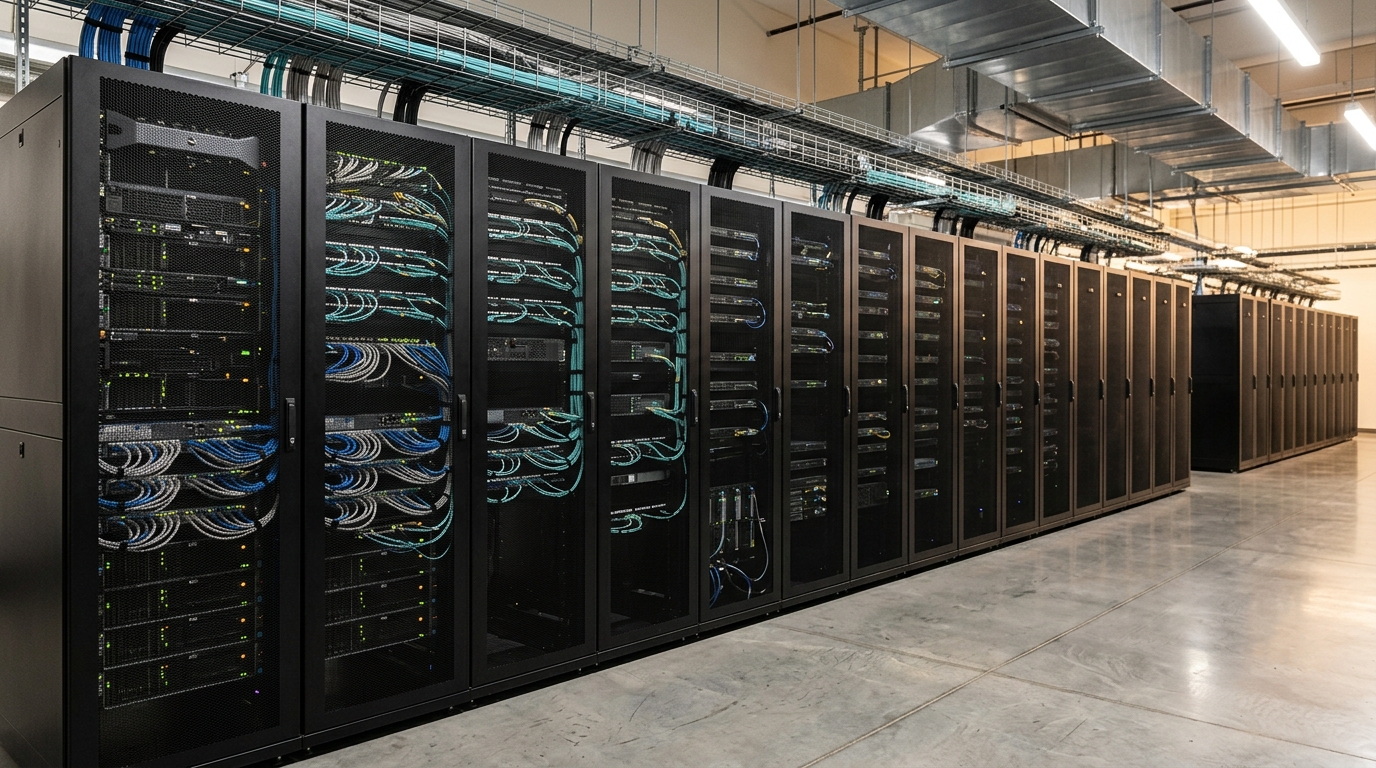
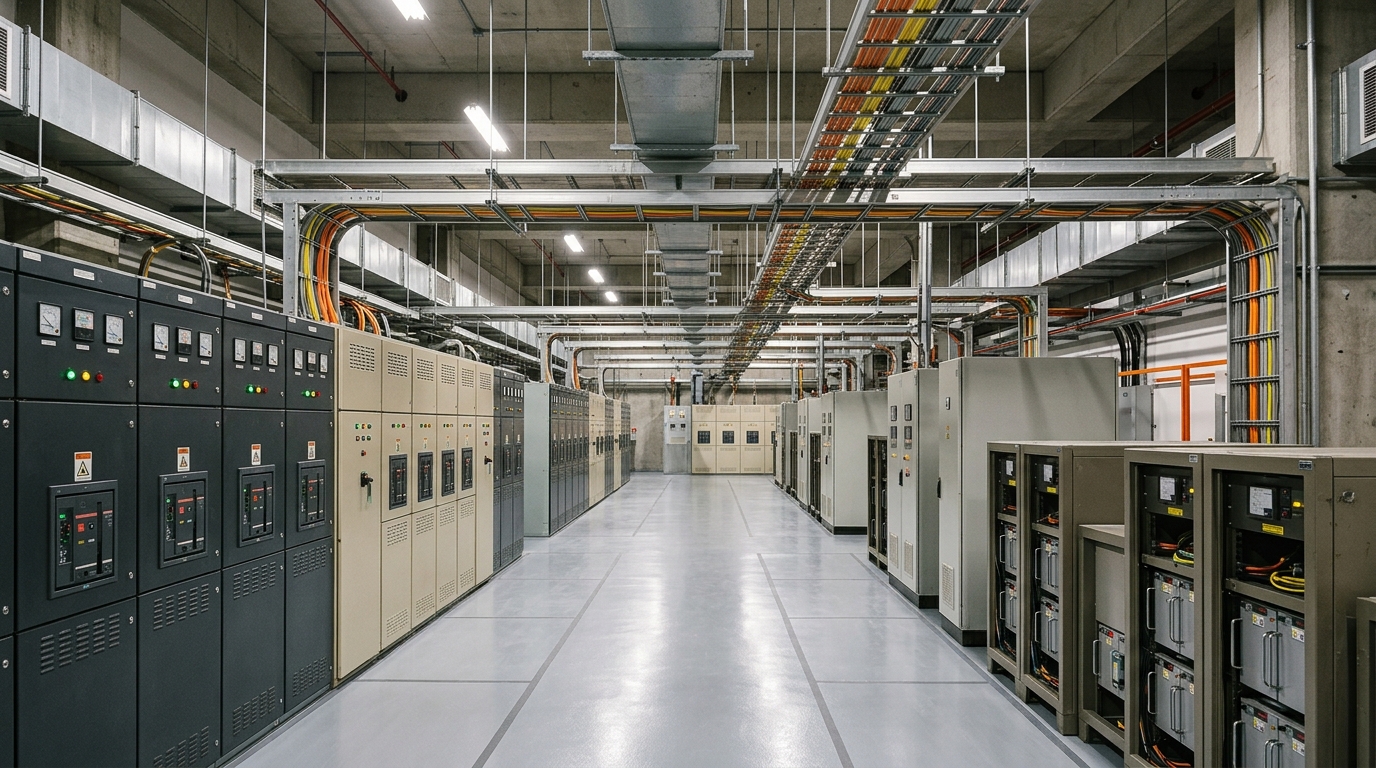
A complete energy review follows the physical path of electricity: utility interconnection and substation transformation, switchgear and UPS conditioning, battery and generator-backed resilience, busways and PDUs, IT equipment, and the cooling systems that remove the resulting heat.
Measurement points should be defined at the utility entrance, UPS output, distribution equipment, and IT load boundary so facility energy, IT energy, cooling overhead, and PUE are not conflated. These are reference-design considerations rather than GreenNext operational measurements.
Grid, Transformers, UPS & Backup
Reference planning for utility feeders, medium-voltage transformation, switchgear, UPS systems, transfer equipment, batteries, and generator runtime under defined redundancy scenarios.
Following Power to the IT Load
A measurement-boundary approach can distinguish utility input, UPS output, busway or PDU distribution, and rack or equipment load while accounting for conversion and distribution losses.
Matching Clean Energy to Demand
Planning models can evaluate solar, wind, battery storage, grid imports, renewable matching, and intermittency without implying a deployed renewable supply or storage system.
Waste Heat Recovery Constraints
Heat exchangers may support water preheating, nearby process loads, or other reuse cases when temperature grade, continuous demand, distance, controls, and economics are suitable; feasibility is site-specific.