
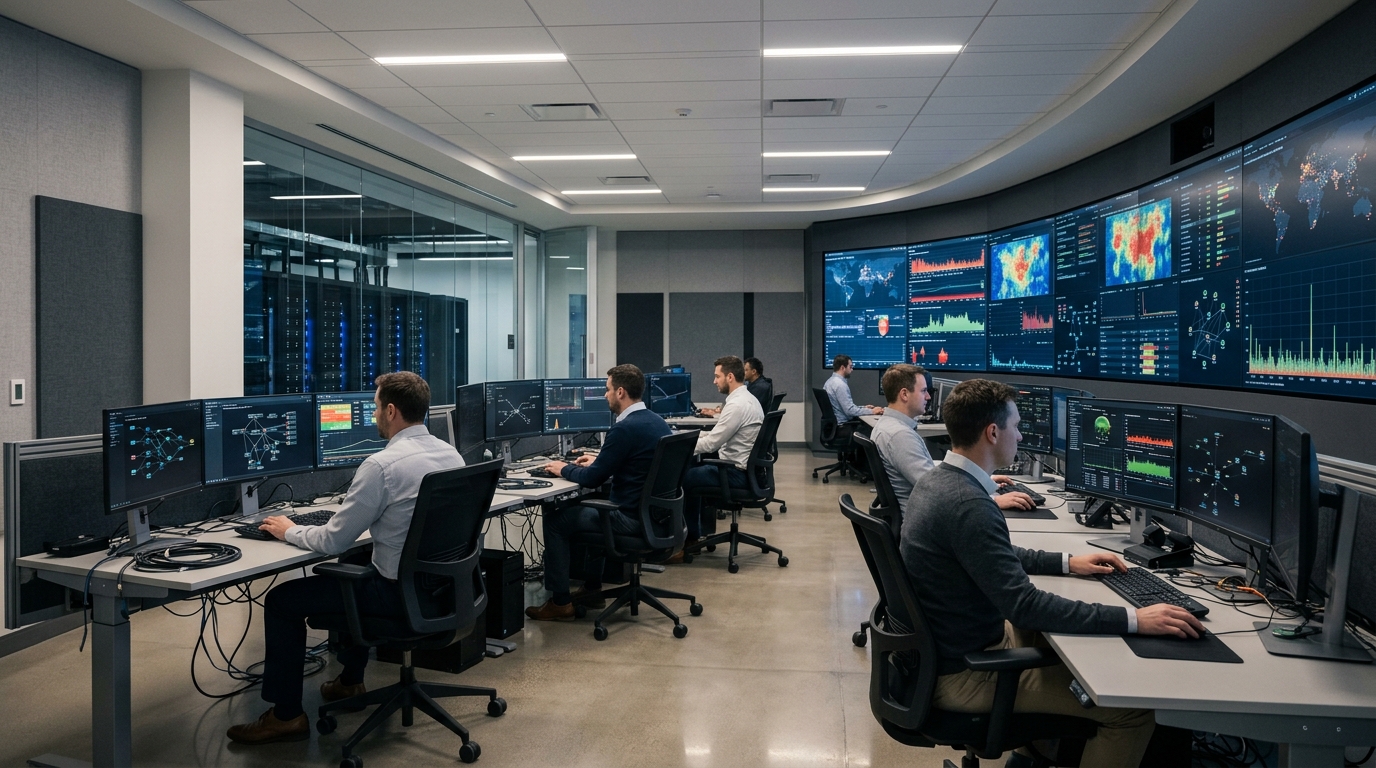
Proactive Headroom Planning
Data center infrastructure expansion requires long lead times: procuring medium-voltage transformers, switchgear, and liquid cooling CDUs takes months or even years. Running out of power or thermal headroom unexpectedly halts AI model training and customer onboarding.
GreenNext specifies a multi-dimensional capacity planning architecture that continuously calculates operational runways across all physical and logical constraints:
Substation & Busway Runway
Simulating peak electrical demand against utility contracted demand, transformer thermal ratings, and UPS battery backup reserves under N+1 failure conditions.
Cooling Plant & CDU Capacity
Forecasting heat rejection capacity across seasonal wet-bulb/dry-bulb temperature spikes, identifying the exact rack count where supplemental cooling is required.
Floor Loading & Rack Space
Tracking structural floor load limits (kg/m²) for ultra-dense 100+ kW accelerator racks and physical cable containment pathway fill ratios.
Spine Ports & Storage Throughput
Modeling network spine switch port availability, optical transceiver reserves, and parallel storage IOPS saturation curves under expanding cluster sizes.
Scenario Modeling & De-Risking Expansion
Using historical consumption trends and workload pipeline forecasts, capacity planners can run what-if simulations: for example, evaluating the electrical and cooling impact of deploying an additional 64-node GPU cluster before purchase orders are signed.
Continue Exploring Automation
Build the Next Generation of Digital Infrastructure
If you are involved in infrastructure planning, data center operations, AI workload management, or regional digital development across South India, we want to understand your requirements.